
Some scars whisper. Others shout.
Maybe yours stretches across your stomach after surgery. Maybe it sits on your arm, chest, or back like a permanent reminder of something you wish you could leave behind.
People might not say anything, but you notice the glance. The pause. The way their eyes linger for a second too long.
Then imagine something different.
The same people who once stared at that scar now look at your skin and simply see… skin. Natural. Even. Balanced. They might even ask what skincare routine you’re using. Some may ask where the scar went.
That transformation is exactly why many people search for medical tattooing in Fishers. And while it can’t erase the past, it can soften the reminder and restore confidence in your own skin.
At Revrse Skin, this treatment isn’t about covering something up. It’s about helping your skin look natural again.
Why Scars Affect Confidence More Than You Expect
A scar isn’t just a mark on the body. It often carries a story.
For some people, that story includes surgery. For others, it may come from injury, pregnancy, or medical treatment. Over time the body heals, but the scar can remain visibly different from the surrounding skin.
The color might be lighter. Sometimes darker. In certain lighting it becomes the first thing you notice when you look in the mirror.
You try creams. You try oils. You might even try laser treatments. Yet the color difference remains.
That’s because scars often lack the natural pigment that healthy skin has. Without that pigment, the scar stands out.
This is where paramedical tattooing, also called medical tattooing, becomes an effective solution.
What Is Medical Tattooing?
Medical tattooing is a specialized form of cosmetic micropigmentation. Instead of decorative tattoos, the goal is to restore natural-looking skin tone.
A trained specialist carefully implants custom-blended pigments into the scar tissue so it visually matches the surrounding skin.
The result is not about hiding the scar with dark ink. Instead, it’s about blending it so it becomes far less noticeable.
According to Dr. Desmond Shipp, a cosmetic and paramedical tattoo expert:
“Scar camouflage works by carefully layering pigments that mimic the client’s natural skin tone, making the scar blend with surrounding tissue.”
This technique is often used for:
- Surgical scars
- Stretch marks
- Injury scars
- Skin graft areas
- Areola restoration after surgery
When done correctly, the treated area looks significantly more natural.
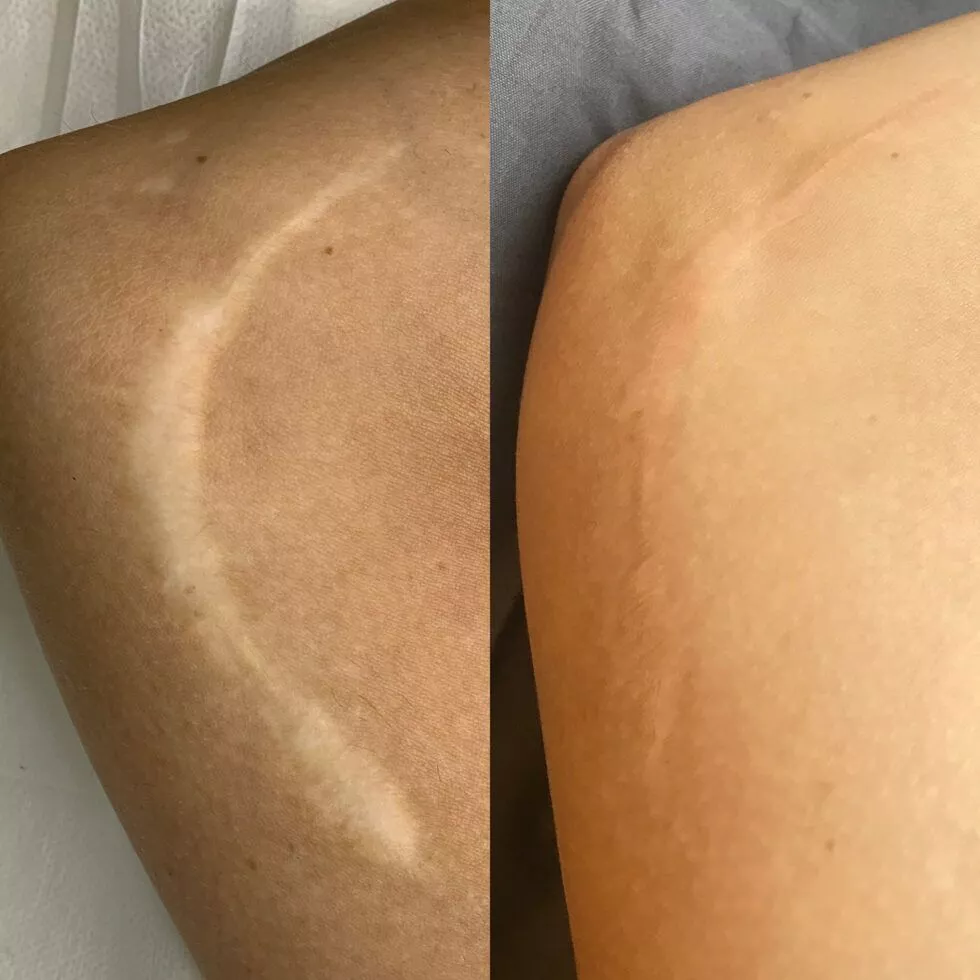
Medical Tattooing Fishers – Before and After Results
The biggest change clients notice after treatment is subtle.
The scar doesn’t vanish overnight, but its contrast against surrounding skin becomes dramatically reduced. Instead of a pale line or dark patch, the area begins to match the surrounding tone.
Before treatment, scars often appear:
- lighter than surrounding skin
- darker than surrounding skin
- shiny or uneven in color
After treatment, the pigment blends with nearby skin tones, helping the scar appear softer and less obvious.
In many cases, clients say something surprising after healing.
They forget where the scar used to be.
As paramedical tattoo artist Vicky Martin explains:
“The goal of scar camouflage is not perfection. The goal is normalcy. When skin looks natural again, confidence follows.”
Tummy Tuck Camouflage Fishers (A Common Request)
One of the most common reasons people seek medical tattooing is tummy tuck scar camouflage.
After a tummy tuck, a horizontal scar usually forms across the lower abdomen. Surgeons place it low so it can hide under clothing, but it can still be visible in swimsuits or intimate settings.
Even when the scar heals well, the color often remains different from surrounding skin.
This is where tummy tuck camouflage in Fishers services can help.
By matching pigment to your exact skin tone, medical tattooing blends the scar into surrounding skin so it becomes much less noticeable.
Many clients report that after treatment:
- swimsuits feel comfortable again
- photos feel less stressful
- attention shifts away from the scar
The scar may still exist, but it stops being the center of attention.
Who Is the Ideal Candidate?
Not every scar is ready for camouflage immediately.
Our specialists recommend waiting until the scar is fully healed. This usually means the scar is:
- flat
- fully closed
- stable in color
- at least 6–12 months old
Certain scars respond especially well to medical tattooing:
- tummy tuck scars
- C-section scars
- stretch marks
- surgical scars
- hypopigmented scars
However, raised or very fresh scars may require additional healing time before treatment.
A consultation with a specialist determines the right timing.
What Happens During the Treatment?
Many people feel nervous before their first appointment simply because they don’t know what to expect.
The process is actually straightforward.
1. Consultation and Skin Analysis
The first step involves evaluating the scar and surrounding skin tone. The specialist determines whether the scar is ready for treatment and discusses realistic expectations.
2. Pigment Matching
Custom pigments are blended to match your natural skin tone. This step is critical because accurate color matching determines how natural the final result will look.
3. Micropigmentation Session
Using a specialized tattoo device, pigment is gently implanted into the scar tissue. The process is similar to cosmetic tattooing but focuses on color blending rather than artistic design.
Most sessions take one to three hours depending on the scar size.
4. Healing Process
After treatment, the area typically heals within several weeks. As the skin settles, the pigment softens and blends naturally with surrounding tissue.
Some clients may need a second session to refine color balance.
How Long Do Results Last?
Medical tattooing is considered long-lasting, but not completely permanent.
Over time the pigment may fade slightly as skin naturally regenerates. Many clients choose a small touch-up every few years to maintain optimal blending.
However, compared with creams or temporary makeup, the results are far more durable.
According to scar camouflage educator Basia Gilmore:
“Scar camouflage provides long-term visual blending. With proper care, results can last several years before any maintenance is needed.”
Why Choose Revrse Skin for Medical Tattooing Fishers
Scar camouflage is both (an art and a science).
The difference between a natural result and an obvious one often comes down to the specialist’s skill in pigment matching and scar evaluation.
At Revrse Skin, treatments focus on restoring natural skin appearance while maintaining realistic expectations.
Clients choose Revrse Skin because of:
- specialized paramedical tattoo training
- precise pigment matching techniques
- personalized consultations
- patient-centered care
Every scar is different. Every skin tone is different. The approach must be customized to the individual.
Frequently Asked Questions
1. Can medical tattooing hide tummy tuck scars?
Yes. Medical tattooing can blend tummy tuck scars with surrounding skin tone, making them significantly less noticeable.
2. How long after surgery can you get scar camouflage?
Most specialists recommend waiting 6–12 months until the scar is fully healed and stable.
3. Does medical tattooing hurt?
Discomfort is usually mild. Many clients describe the sensation as similar to cosmetic tattooing or light scratching.
4. How long does scar camouflage last?
Results can last several years. Occasional touch-ups may be needed to maintain optimal color blending.
5. Who is a good candidate for medical tattooing?
People with healed scars, stretch marks, or pigment loss are often good candidates, especially when the scar is flat and stable.
Restore Confidence in Your Skin
Scars often tell stories we didn’t choose.
They can remind us of surgery, accidents, or moments we would rather leave behind. While those experiences are part of life, the scar doesn’t have to dominate how you see yourself.
Through medical tattooing in Fishers, many people rediscover something simple but powerful (comfort in their own skin).
At Revrse Skin, the goal isn’t to erase the past. It’s to help your skin look natural again so the scar stops being the first thing you notice in the mirror.
If you’re ready to explore scar camouflage, reaching out for a consultation could be the first step toward rewriting how you feel about your skin.